
In 1996, the world was still digesting what Rage Against the Machine had done to it three years earlier. Their self-titled debut album had arrived like a grenade rolled under the door of mainstream rock. It was loud, political, furious, and somehow also on Epic Records. People assumed it was a one-off. Surely a band that angry, that blunt, with a name like Rage Against The Machine would burn themselves out or be quietly buried by the very machinery they claimed to oppose, right? Wrong. ‘Evil Empire’ was Rage's answer to that particular brand of scepticism, and they delivered it with the subtlety of a brick through a window. By the time Tom Morello, Zack de la Rocha, Tim Commerford and Brad Wilk reconvened with producer Brendan O'Brien, they were carrying the weight of having carved out a new niche. Their self-titled record had introduced a generation to the idea that funk, hip-hop and metal could coexist inside something genuinely political. Not political in the 'vague lyric about feelings' sense, but more in the read and quote Zapata sense. The question hanging over 'Evil Empire' wasn't whether it would be good. It was whether it could truly mean something.
Retrospective: Rage Against The Machine – ‘Evil Empire’
As Rage Against the Machine's sophomore record turns thirty, we revisit the album that proved the revolution wasn't just a debut fluke.
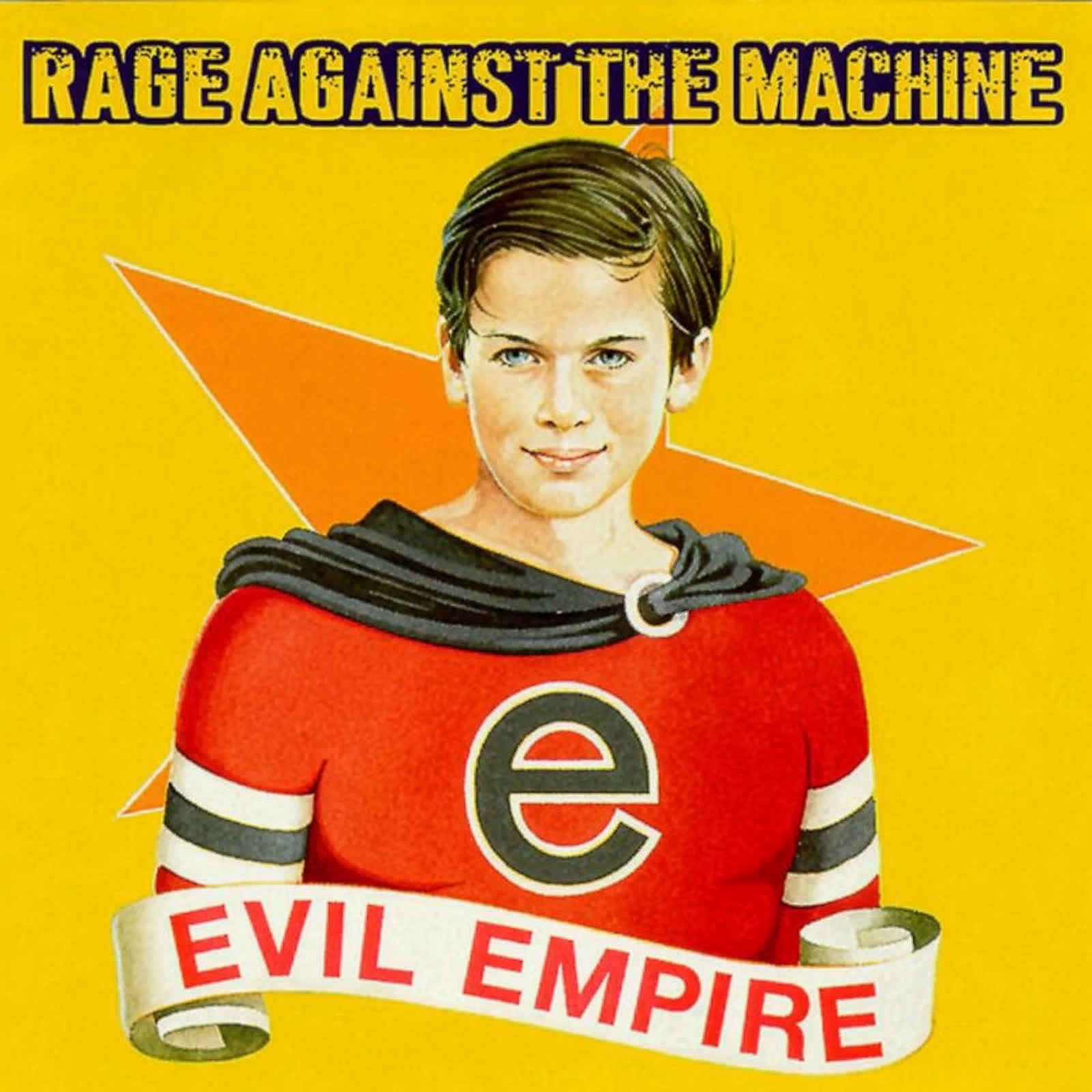
Opening track ‘People of the Sun’ answers that question immediately. It arrives without ceremony or warning; just forty-six seconds of building guitar noise before Zack De La Rocha is in your face with a history lesson about the Zapatista uprising, delivered at velocity. There’s no attempt to ease you in, no concession to listeners who might not be ready. It sets the album’s terms immediately: keep up, or get left behind. The record never lets that tension drop. ‘Tire Me’ is the closest ‘Evil Empire’ comes to a deep cut; a short, sharp, blast that on any other album would be filler but here feels like necessary punctuation. ‘Vietnow’ is about the creeping authoritarian rot inside mainstream media, while ‘Without a Face’ confronts American indifference to the human cost of its southern border policies. In 1996 these statements felt urgent. In 2026 they feel almost uncomfortably relevant in an era of aggressive ICE operations across the US.
What is often lost in discussions about ‘Evil Empire’ is how strange it is as a piece of music. Morello’s guitar playing here is frequently less riff-based and more sculptural; sounds that shouldn’t come from a six-string wrapped around ideas that shouldn’t fit inside a rock song. The breakdown in ‘Snakecharmer’ sounds like two genres having an argument. ‘Roll Right’ sits in a low, slow funk pocket that Commerford and Wilk hold down with almost terrifying restraint while the vocals build pressure above it like a looming weather front. The band had clearly spent time in the studio, not only tightening what they already knew, but deliberately pulling things apart to see what would happen.
The centrepiece, of course, is ‘Bulls on Parade’. Released as the lead single, it became the album’s calling card. The horn-stab guitar lick is still instantly recognisable thirty years later, and the chorus is as close to a fist-pump anthem as Rage would ever permit. It was everywhere in 1996. A strange alchemy meant that its frequent radio play did nothing to blunt its edges. Even between soft rock ballads on a Top 40 station, it still sounded dangerous.
Thirty years on, the question of ‘Evil Empire”s legacy lands differently depending on who you ask. The obvious lineage runs through early-2000s rap-rock, some of which Rage would probably rather not be credited with. But look further and the influence is more interesting: you hear it in the socially-conscious sharpness of Run the Jewels, in the sonic collisions of Idles, even in the political venom of Kneecap, and in the generation of heavy bands who are willing to say exactly what they mean, and who expect the audience to handle it. Rage proved that you could write dense lyrics with specific political content, proper nouns, dates, and movements, and still have people screaming them back at you in arenas. That template is everywhere now.
For a lot of people, ‘Evil Empire’ was the album that proved music could be an argument. Not a vibe, not a feeling, nor a mood, but an actual, sustained, well-sourced argument that also happened to bang. Thirty years later it still sounds like something that matters. Not as a nostalgia kick, but as something that is still acutely relevant, perhaps more than ever in today’s political climate. It’s a record that picks a side and dares you to disagree.
KATHRYN EDWARDS