
FEATURE: Edinburgh Fringe 2026

FEATURE: Edinburgh Fringe 2026

By Kathryn Edwards

Oct 1, 2026 14:02

You may be wondering why a platform whose coverage is famously centred around punk, hardcore, metal, and emo music is publishing an article on this year’s Edinburgh Fringe. If you’re a frequent reader of Punktastic, however (and shout-out to you guys), you’ll know that the concept of punk is synonymous with much more than its Cambridge dictionary definition of ‘a culture popular among young people, especially in the late 1970s, involving opposition to authority expressed through shocking behaviour, clothes, and hair, and fast, loud music’. Edinburgh Fringe itself came into existence as follows: in 1947, during the run of the invite-only Edinburgh International Festival, eight theatre troupes rocked up uninvited, organised their own performance space, and put on their shows alongside the run of the official festival. That, in itself, is pretty punk. Since then, it’s absolutely snowballed, with the Fringe audience now being about quadruple the size of the original Festival’s, with a solid reputation of being the largest open-access arts festival in the world. It offers artists across an insanely wide range of art forms and backgrounds absolute creative freedom, massive career-launching potential, and a buzzing hub of creativity you won’t find anywhere else.

Over the course of a single week, we’ll be compiling a written highlight reel of trailblazers, innovators, rule-breakers, sticking-it-to-the-man-ers; anyone performing at the Fringe who embodies the spirit of punk. So, without further ado, let’s get into it. Punktastic: Edinburgh Fringe edition.

First up is Bitches in Stitches, a global collective of women, queer, trans and non-binary comics who’ve built their own scene rather than wait to be let into someone else’s. Today, that means getting everyone performing at the Fringe into one space for a photo. Simple idea, sharper point.

Bitches In Stitches host Count us In Photocall Meetup

This global all-femme/them comedy collective strives to do something that’s often paid lip service but less often actively addressed in the comedy world: where’s the representation? Times are a-changing, but comedy seems to be lagging behind – there’s still a huge disparity between the comics that actually exist, and those that get platformed. Today, Bitches in Stitches are gathering a group of women, queer, trans, non-binary and ‘othered’ comics, all performing at the Fringe. The idea is simple: the comics gather in one spot, then take a group picture. It’s nothing crazy, but this is quite deliberate. It quietly serves a deeper purpose: it’s concrete, visible proof that these comics – so often overlooked by the masses – exist, and are here at the Fringe. All too often, this under-representation is excused with the notion that othered comics are ‘too difficult to find’. Not now, they’re not. The group photo is a kaleidoscope of colour, costumes, posters and picket signs. ‘FIND US. BOOK US. PAY US.’, one of them reads. Seems simple enough a request. This might catch on.

If that photocall is the appetiser; the main event is the group’s actual Fringe show, The New Grrrl Order, a rotating lineup pulled from their chapters across Hong Kong, Manila, LA and London. It’s the first time most of their members have shared a stage at once.

Bitches in Stitches present “The New GRRL Order”

Bitches in Stitches: The New Grrrl Order runs on a lineup that shifts night to night but usually pulls from a core group: Fran Ayala-Rock, Rose Rage, Arie David, Casey Lee Brander, Alix Brown and Kate Hu, drawn from the collective’s chapters across Hong Kong, Manila, LA and London. The whole thing started from a fairly simple, fairly punk piece of logic. Rather than keep trying to shrink themselves down to fit a stage that was built with men in mind, they built their own stage instead, and then kept building it bigger. That instinct goes right back to the beginning. Fran founded Bitches in Stitches in Hong Kong in 2021, as a one-off night with five other femme comics in a bar, expecting maybe a modest crowd of friends. It sold out within one day. From there, it snowballed. Five years on, it’s grown intoa network of more than ninety femme, non-binaryand ‘othered’ performers worldwide, and this is the first time most of those chapters have shared a stage at once.

A few venues over, four more comics are tackling representation from a different angle with ChatLGBT, a show where the audience submits questions and the cast answers them live, unfiltered, instead of asking a chatbot. Bianca Boorer, Jordan Bonner, Barb Barrick and Willow Marler make up the panel, and between them they cover a LOT of ground.
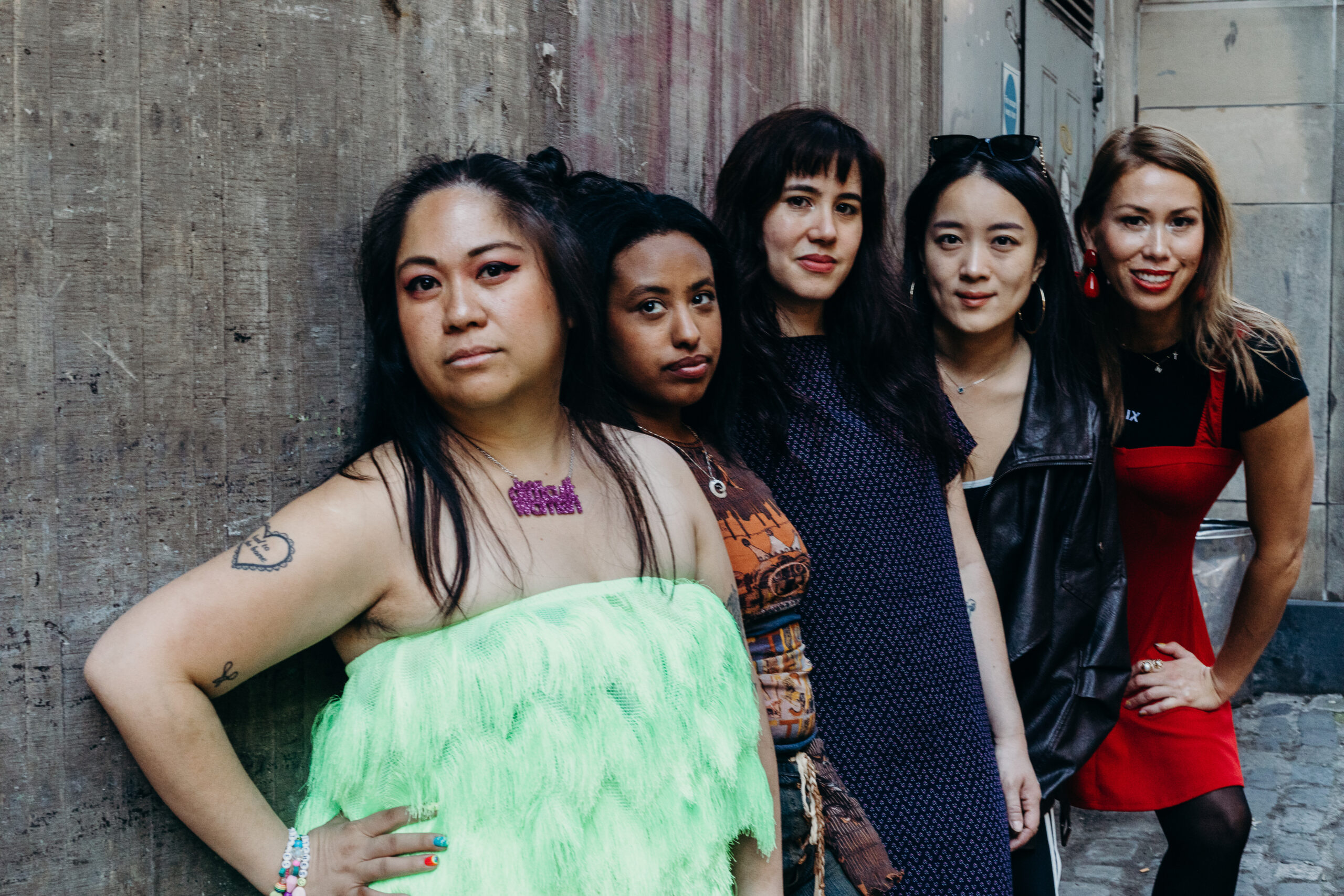
Barb Barrick, Bianca Boorer, Jordan Bonner and Willow Marler present “ChatLGBT”

Our slay-I (geddit?) assistants for the evening are Bianca Boorer, Jordan Bonner, Willow Marler and Barb Barrick, and between them they cover an enormous amount of ground. Bianca’s set draws on growing up ‘Filipish’, caught between a Filipino and English upbringing, with her parents providing no shortage of material along the way. Jordan, meanwhile, has made peace with a surname that invites exactly the joke you’re thinking of, and brings a restless, ball-of-energy presence to the stage that carries over into the group dynamic. His laugh alone has become something of a running gag among the others. Barb Barrick takes the room on a filthy, freewheeling tour through being queer and Irish, the joys of a good VPN, and closes out with a full musical number for good measure. And then there’s Willow Marler, whose set is something else entirely. Willow Marler’s routine is a delight to watch. It’s sharp, witty, and intelligent comedy — somehow, she envelops the room in a delicate bubble of emotional vulnerability, then swiftly bursts it with a killer punchline in one effortless sweep. By the end, the four of them pile onto a couch together to field the questions the audience would never dare put to ChatGPT, and that’s really the show in miniature: a bit filthy, a bit tender, and entirely unwilling to take any of it too seriously.
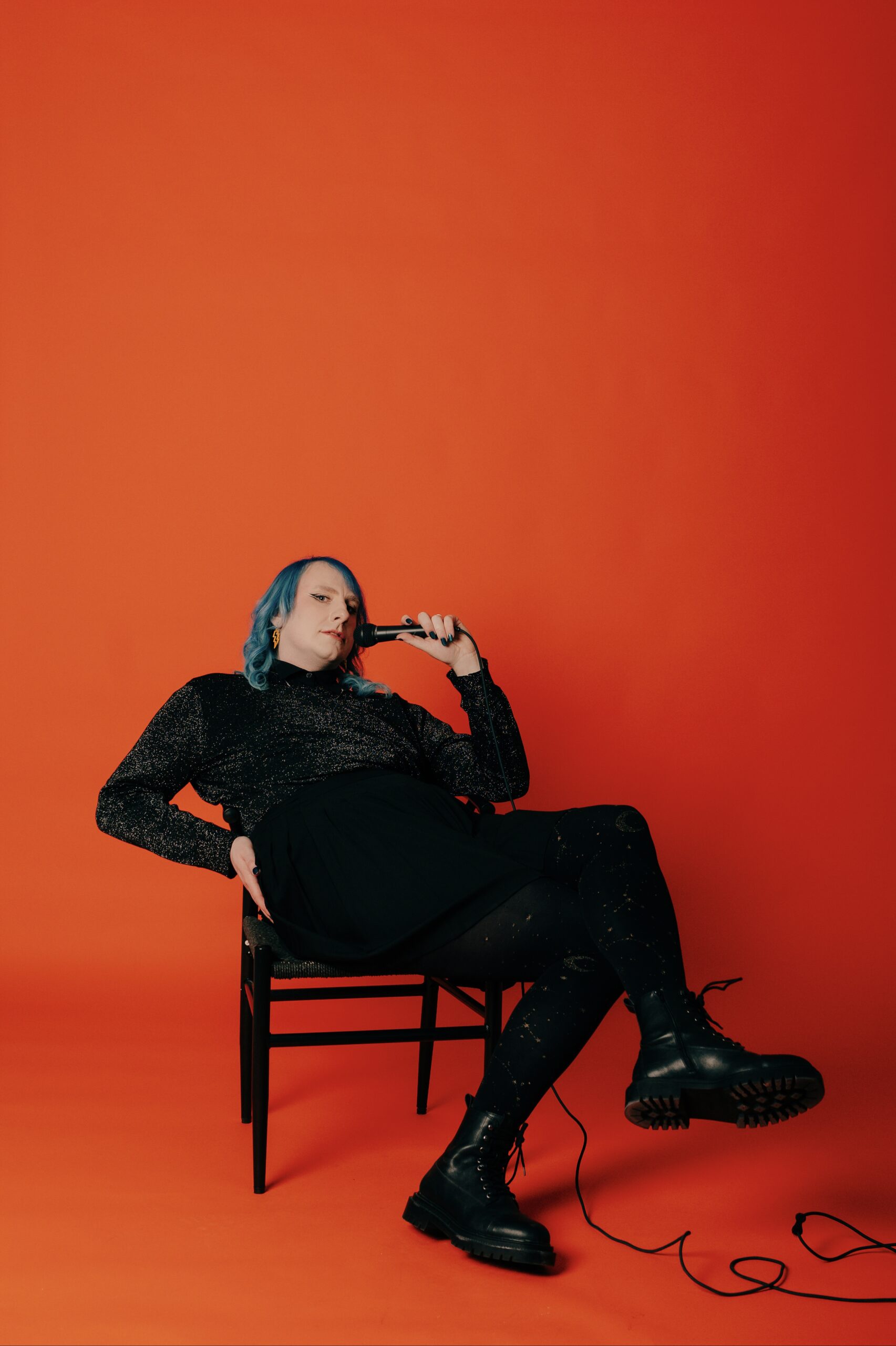
 

Though all four performers were fantastic, it’s Willow Marler’s set, and the story behind how she ended up on that couch at all, that really sticks with us. So we sit down with her for a proper chat.

In conversation with Willow Marler

Willow’s path into stand-up comedy was anything but conventional and linear. Then again, where would be the fun in that? She first tried standup back in 2018, on a beginners’ course that guaranteed you a five-minute slot at the end. ‘I did maybe twenty gigs in total,’ she says. ‘It wasn’t often enough to really build any momentum with it. I fell out of love with it a bit, and then, well, I stopped right as COVID hit. Timed that one perfectly.’ It stayed shelved for years. What brought her back wasn’t a comedy scene at all, but a maths conference. One of the speakers was a comedy coach and director, talking about how standup techniques can help people who are anxious about public speaking. Willow bought his book on the spot. She recounts the experience: ‘I love getting into the nitty-gritty of something I’m trying to learn. People act like standup is this untouchable art form, that you can’t actually study it, you just have to get up and do it. And yes, some of that’s true. But there’s so much you can learn from a book. Joke structure, the idea of a stage persona and how that can differ from who you actually are offstage — all of that.’ She read it on a family holiday, taking notes, writing her first new set in years while everyone else was on the beach. Her first proper gig back was in Berlin. Then, almost by chance, Willow found their way into a London new-act night competition, and won it. Willow came back to the same show to perform as the headline act, and there, they met Bianca. That was the start of a friendship that became a comedy family. Willow and Bianca got in touch over Instagram, at first to discuss the incident, but quickly developed a friendship. A few months later, when a member of her Fringe group dropped out, she asked Willow to take the spot. Willow almost bit her hand off. Who wouldn’t? ‘It’s mad how many weird twists of fate it took to get me here. I actually messaged the person who dropped out to thank them  — I know it wasn’t fun for them, but they genuinely handed me one of the best things that’s ever happened to me.’ The result is ChatLGBT, a show billed as the queer answer to all your burning questions.  Audience members submit whatever they want advice on, and Willow, Bianca, Jordan and Barb Barrick (Robbie Gould’s stage persona) take turns fielding it live, sharp and unfiltered, on the basis that no chatbot will ever roast you with quite the same love. It’s a show that, by Willow’s own description, runs less like a tight unit and more like a jazz quartet. ‘Everyone gets their own little solo, and it’s slightly different every night, but at the end we all come back together. That’s basically what the show is.’

Being trans changes what she has to think about before she even opens her mouth, in a way it never used to. They talks about scanning a room before they gig — is this a queer-friendly night with a flag on the stage, or an older members’ club where she’s bracing for something else? Things she never had to consider before transitioning, like which toilet to use in an unfamiliar venue, now sit alongside the actual material in her head. ‘Before, it was just: Can I remember my set? Now there’s a whole extra layer of, am I safe here, what am I wearing, what will people think of what I’m wearing. But it’s also pushed my material somewhere deeper. Before, my identity wasn’t really present in my sets at all. It was just silly ideas, funny thoughts, nothing that was really me. Now I’m thinking about myself from so many more angles, and I think it’s made the writing better, even if it’s more work to get there.’ That extends to things like voice — Willow doesn’t feel dysphoric about her voice day-to-day, but is starting to think about voice training as a performance tool rather than a personal need, to sharpen the contrast between their usual register and the character voices she slips into for a bit.

She’s full of admiration for a trans performer she’s gigged with previously and seen on the circuit this year, Alex Franklin, whose show wove together songs built entirely from cruel comments she’d received online: ‘It was hilariously relatable in the worst way — you must be a man because you’re funny, you must be a woman because you’re not funny, round and round. I’ve had almost the exact same comments, from what felt like the same people. But she performs it in full glam, gorgeous outfit, completely unapologetic about looking good — and just letting that sit there without qualifying it. That felt important to watch.’

For Willow, the punk of it isn’t really a choice, but something that’s baked into their existence on stage in the first place. ‘Being trans is anti-establishment by default, because the world would rather we weren’t around. So the second I get up on stage, it’s like, not only am I trans, I’m gonna bang on about it, and you’re gonna listen. Because I’ve got a fucking microphone, mate. And I’m on a slightly elevated platform’. She’s careful to credit the spaces that made room for her rather than claiming she built them herself queer lineups, the WhatsApp groups of women and non-binary comics that quietly hold each other up, nights that told her you belong here when her Instagram comments were telling her the opposite. She points to Sam Nicoresti’s Edinburgh Comedy Award newcomer win as a small but real sign of a door opening, even if it doesn’t fix everything on its own. “It doesn’t solve the problem. But it says: even the big institutions are watching now. Maybe in a few years we won’t have to carve out our own little corners quite so much — we’ll just be part of the mainstream, full stop.” Asked what her Fringe run would be as an album, she circles back, unsurprisingly, to that jazz-quartet image of the show — everyone taking their own solo, nobody quite in the same key, somehow landing together every night regardless. Keep your eyes peeled for performances of Willow’s new solo show, She It. They It. Sorted. coming very soon toa city near you!

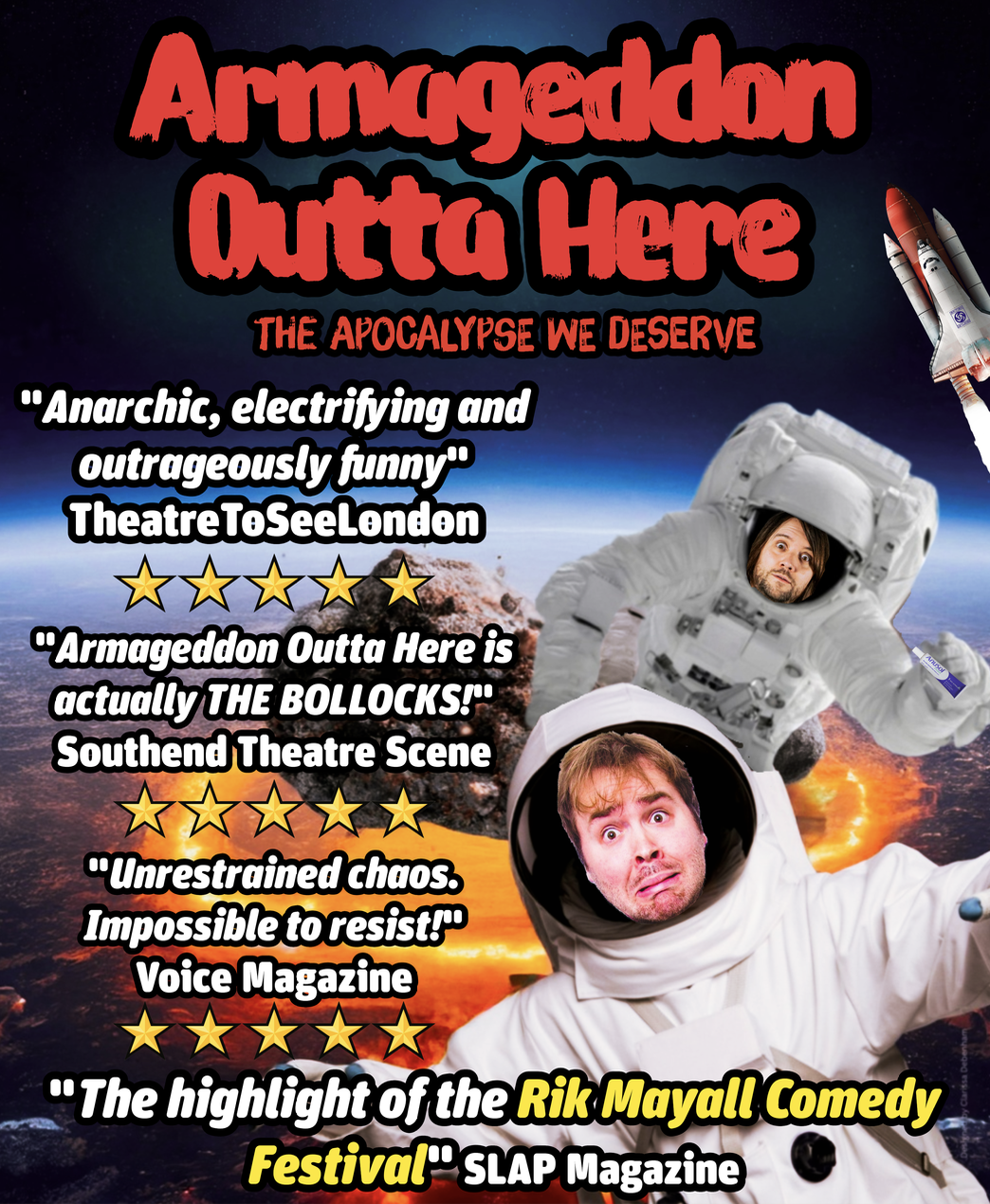
From one kind of reckoning with an unfriendly world to another, entirely more literal one: Armageddon Outta Here is a full-length sketch show about an asteroid hurtling towards Earth and the various idiots failing to deal with it well. We catch up with director Chris Roberts and performers Tom Johnson and Rob Glenister, the three people responsible for the chaos.

In conversation with Chris Roberts, Tom Johnson & Rob Glenister

An asteroid is hurtling toward Earth. Nobody in Armageddon Outta Here is handling it especially well. Ego, denial, faith and petty squabbling ripple out across a world teetering on the edge of total annihilation, and the show that results is dark, loud, and gleefully anarchic. Less a countdown to the apocalypse than an excuse to watch everyone’s worst impulses come out to play. It’s the full-length sketch show grown out of director Chris Roberts and writer-performer Tom Johnson’s earlier, award-winning play Sacrifice, with Tom and fellow performer Rob Glenister carrying it on stage. Getting to Edinburgh was never a maybe, it was always the plan, from day one. ‘Fringe was always the goal, right from the start,’ Chris says. ‘We were doing early bits of it in a bar in Southend, working it out in front of whoever happened to be in that night, and everything since then has been building towards this.’ The plan is to get something on in London next, too. That, seemingly, feels like the natural next step.

Chris comes at theatre from a slightly sideways angle. His day-to-day work is primarily in film and TV, and it was the pull of doing something different, something more immediate, that dragged him toward the stage in the first place.

‘Theatre’s an amazing art form, and especially short-form stuff. There’s an immediacy to it that you just don’t get on a shoot. You can’t reshoot a bad take in front of an audience. You just have to live with it and carry on, and that’s part of what I love about it.’

He and Tom didn’t actually meet through this show at all. Chris was casting an actor for a completely separate project when their paths first crossed, and it was that conversation (nothing to do with asteroids or the end of the world) that laid the groundwork for the creative partnership behind Sacrifice, and later Armageddon Outta Here. Rob’s route into the group was different again: he first worked with the team doing sound effects at the Salt and Sleet festival, before the relationship tipped over into performing, and he ended up on stage alongside Tom instead of behind the desk.

At its core, the show treats the end of the world as a kind of social experiment: strip away every consequence, every obligation, every reason to behave, and see what’s actually left of people. ‘I think if people were told they wouldn’t be judged for their actions, a surprising number of them would become horrible perverts,’ Tom says, only half-joking. ‘That’s basically the engine of the whole show. The asteroid’s coming, nothing matters anymore, so why would anyone bother behaving? It gives us permission to take every character to the worst possible version of themselves, which is obviously very fun to create.’ It’s not a subtle show, and none of the three seem remotely bothered by that. There’s a musical number in there fondly nicknamed ‘the Bollocks Song,’ and the whole thing is built to run on barely-restrained chaos rather than precision. ‘It’s not polished. It’s rough and ready, we just get up there and do it,’ Tom says. ‘We don’t punch down, we punch each other. It’s silly for silly’s sake, and I think that’s the point. It’s less a performer-and-audience thing than a ‘come and enjoy this mess with us’ thing. We want people to feel like they’ve been let in on something, not performed at.’

Even mid-run, the team are already looking past this show. Chris is developing a new feature alongside a handful of shorts, sticking largely to his usual home turf of horror. The project he’s most animated about is an 80s-throwback horror set in present-day Southend, called ‘Suckers’. Co-written with and directed by Jack Burney, it’s built around a characters Jack and Suzie, and sounds like it shares at least a little of Armageddon’s DNA: familiar setting, heightened chaos, everything a bit too much on purpose. When asked about punk music favourites, because of course, the three of them pull in wildly different directions. Bad Nerves gets a shoutout for pure sprint-tempo energy, alongside Billy Bragg’s first record, Otto & Astrid, and Fugazi. Rob has skin in the game beyond fandom, playing in a Weezer covers band called Geezer, and John Otway gets a mention too, the sort of cult, gloriously undignified reference that feels right at home with the rest of the show’s sensibility. Tom circles back to his own earlier work, Verbal Diary, Chortle-listed among the Top 10 Comedy Plays at Fringe 2024, which follows, fittingly, a failed attempt to revive a punk musical. Chris rounds the list off with a nod to Ice Nine Kills’ concept album The Silver Scream, another piece of art more interested in spectacle and nerve than good taste. It’s a fitting note to land on, for a show that, by its own creators’ account, has absolutely no interest in being tasteful and is much funnier for it.

Not every punk story at the Fringe starts in a bar, though. Rockbeth started in a school hall, and it’s exactly what it sounds like. Macbeth (The Rock Opera!), courtesy of a school’s performing arts group.

More The Merrier presents Rockbeth

Rockbeth (Shakespeare’s Macbeth, reimagined as a full-blooded rock musical, soundtracked by AC/DC, Black Sabbath, Jimi Hendrix, Santana and The Sex Pistols, comes from More The Merrier, the performing arts group at More House School, the largest specialist school in the UK for neurodiverse kids. It first went up in front of a home crowd in 2023, landed so well that the school decided it deserved a bigger stage, and by August, that year the cast were performing it five times, sold out, at theSpace’s Triplex venue, enough to earn a Fringe Sell-Out Laurel on their first attempt. Getting there wasn’t simple or cheap. The school had to raise £25,000 to fund the run, and did it the properly scrappy way: a benefit concert, parent-run auctions, the cast packing bags at Waitrose, and, fittingly for a rock show, their guitarist busking to help close the gap. It’s a rare achievement for a school production, made rarer still by it being their first time bringing anything to the Fringe at all.

The 2026 return leans further into the chaos rather than away from it; the show’s own billing describes it as louder, darker and “even more deliriously doomed,” with a power-hungry frontman and a band teetering between world domination and total backstage collapse. Blood-red lighting, shredded solos, thunderous drums, and Shakespeare’s body count set to a riff. Part gig, part Shakespearean meltdown, and entirely capable of packing out a room full of strangers on the strength of a school production alone. It’s an easy show to underestimate on paper. It’s a school show, its cast are teenagers, and it’s Shakespeare. That doesn’t mean you should, though. That’s arguably the most punk thing about it: a group of young performers who aren’t professional, aren’t trying to be anything other than exactly who they are, plugging in and making something loud out of it anyway.

If Rockbeth is about who gets to plug in and make a racket, Women of Rock is about who’s been doing it all along without getting the credit. Fronted by Reine Beau and the Night Owl Band, it runs from Sister Rosetta Tharpe through to Tina Turner, tracing rock and roll back to the women who pioneered it.

Night Owl Productions present Women Of Rock

There’s a moment towards the end of this show where the question of the night gets asked outright: is rock a genre, or is it a mentality? The show spends an hour building its answer through sheer accumulated evidence, sprinting through the decades on the backs of the women who built the genre in the first place, rather than the ones who got handed the credit for it afterwards. Fronted by the sheer, unrelenting force of Reine Beau and backed by the award-winning Night Owl Band, the set opens with Sister Rosetta Tharpe, the gospel-trained guitarist whose distorted electric riffs in the 1930s and 40s predate almost everything that gets called rock and roll, and who rarely gets the credit for inventing the sound in the first place. From there it moves through Janis Joplin’s raw, blues-scorched vocals, all cracked edges and total commitment, into the arena-sized swagger of Suzi Quatro and Heart, two acts that proved a woman could headline as loud and as hard as any man on the bill. There’s room too for The Runaways, teenage and unpolished and furious, the sound of a band that hadn’t been told yet what they weren’t supposed to do, and for Tina Turner, whose command of a stage remains close to unmatched regardless of genre, era, or decade. It’d be easy for a show built this way to collapse into nostalgia, a run of hits with a costume change between each one. Women of Rock avoids that by giving each artist the story as well as the song, what it actually cost to get up there in an industry built to keep them off it, and what they did with the space once they’d taken it. That’s really where the show’s argument lands: this isn’t a genre defined by chord structure or drum pattern, it’s a mentality, a refusal, a stubborn insistence on being heard on your own terms. Soaring vocals and driving guitars do a lot of the work, but it’s the throughline of women taking a stage that wasn’t built for them and refusing to leave it that gives the show its real spine, and its punk credentials.

All of that is worth shouting about from the rooftops. But it’d be dishonest to wrap up without admitting what so many acts have to get past just to be standing on a Fringe stage in the first place.

It’s worth being honest about the thing sitting underneath all of this: the cost of performing at the Fringe excludes people. Venue hire, accommodation that gets more extortionate every year, marketing, the sheer number of days you need to take off paid work to be here at all — it adds up to thousands of pounds before a single ticket sells, and that’s before you’ve accounted for the shows, like Rockbeth, that had to fundraise their way there from nothing. That’s a direct contradiction of what the Fringe was actually founded to be: an open-access festival that anyone could turn up and perform at, with no committee gatekeeping, or entry fee. What’s kept that founding spirit alive, more than almost anything else on the programme, is the Free Fringe. Peter Buckley Hill started this model in 1996 after a week of playing to an empty, ticketed room and deciding, in his own words, to just make it free to get people in. No venue hire charged to performers, no ticket charged to audiences, a bucket by the door for whatever people feel it’s worth afterwards. It’s a small, stubborn piece of infrastructure that’s grown into one of the biggest producers at the entire festival, and it remains one of the only routes in for artists without funding, without a producer, without institutional backing behind them. In a festival that increasingly runs on who can afford to be there, that’s about as punk a piece of engineering as it gets.