
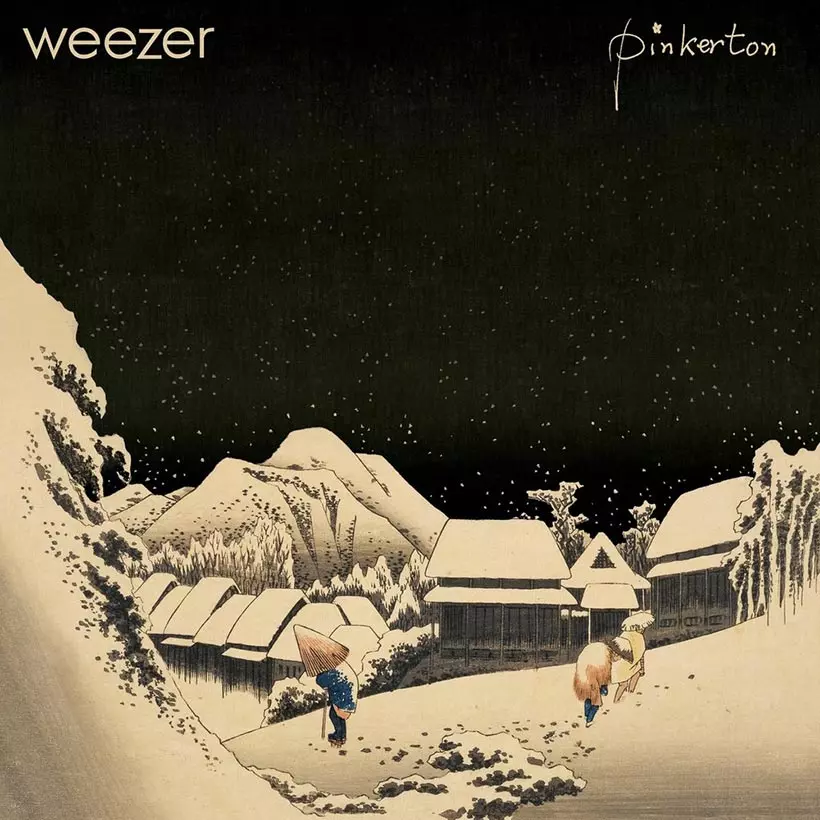
In the spring and summer of 1995, Rivers Cuomo was in a dark place. Sure, his debut album with Weezer had gone multi-platinum the year before, but his success felt hollow. Originally, he wanted to follow up ‘The Blue Album’ with a fully fledged rock opera tellingly titled ‘Songs From A Black Hole’ but that came to nothing. Between surgery, the following physical therapy and waiting to find out if he’d been accepted to Harvard to study music, Cuomo clung on to one of the things he loved the most to keep him going as the year went on: opera. Puccini’s ‘Madame Butterfly’ became his go-to, and as the twenty-five year old future nerd icon waited to see what was around the corner for him, the ninety year old stage masterpiece got played on repeat.
Let’s talk about ‘Madame Butterfly’ for a bit. Yes, I know this isn’t a retrospective for ‘Operatastic’, but bear with me. In the opera, the male lead, a US naval officer called Pinkerton, marries a much younger Japanese girl, then ghosts her. She’s hopelessly in love with him, and dreams he’ll come back. Just as she gives up and ends her life, he shows up again. So far, so ‘Romeo and Juliet’. According to his ‘Pinkerton Diaries’ published in 2011, what spoke to Cuomo was how this character felt to him like a touring rock star with a groupie in every town: always on the road, pretending to make a commitment to the ladies, and generally being a dick to those around him. More than that, the depth of emotion in this classic tragedy seemed to sum up what he was hoping to convey about the shallow and fleeting nature of his tour experiences.
Why mention this? Listening to the lyrics on ‘Pinkerton’ now feels slightly creepy until you realise it’s at least partially coming from this place of Orientalism and the characters which filled Cuomo’s head at this point ins career. The genesis of Weezer’s outsider viewpoint, ripe with longing, that comes into all of their later work starts with this disillusioned, nervous guy in a lot of pain who heard something in Puccini’s story that touched him. Was he the tragic mistaken hero, the treacherous male lead, or just a guy lost in unknown territory? These were the questions the vocalist hoped to answer for himself, and formed the basis of his second album.
Most of ‘Pinkerton’ was written very quickly during Cuomo’s first term at Harvard, and within a couple of seconds we can feel the change that his year wrought on his songwriting. Weezer’s debut record brought us ‘Buddy Holly’ and ‘Undone (The Sweater Song)’, but ‘Pinkerton’ opens with ‘Tired Of Sex’: a sweaty diatribe against the hookup culture conveyor belt. The whole band are so raw and so anguished, the pressures of their weariness bleeding through every bar they play. ‘Pinkerton’ was recorded without a producer, in bits and pieces over Cuomo’s university holidays, and the scattershot spontaneity is partly what makes this such a different Weezer record. While they always seem to take a teenage viewpoint in every song in their back catalogue, ‘Pinkerton’ feels like the real deal: a coming of age record that’s dealing authentically with the messiness of being a young adult.