
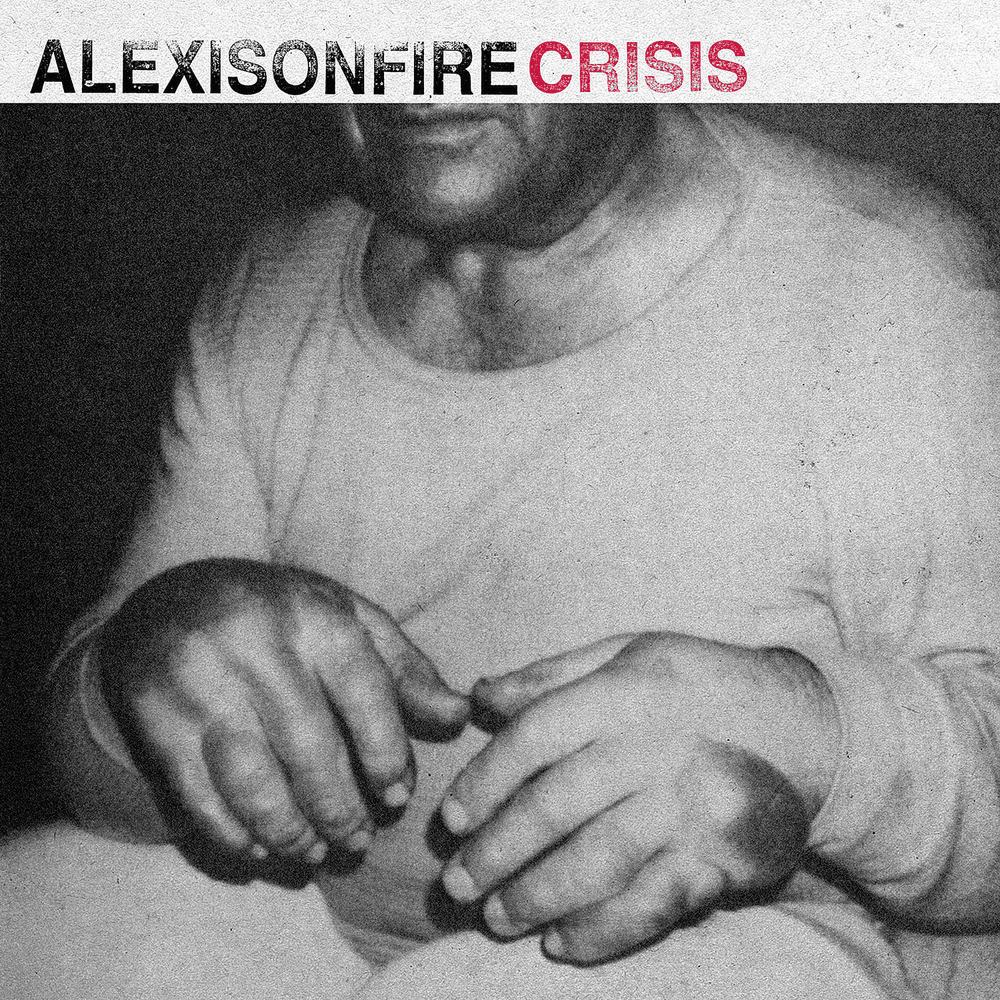
In January 1977, the Great Lakes Blizzard struck the Niagara region of North America. Temperatures plummeted to -18c degrees and hurricane-level winds smashed windows and doors. Anyone driving on the motorway was forced to abandon their cars and try and make it home on foot. Two thousand children were trapped in their schools by nearly three metres of snow over the weekend, and rescue workers took on thirty six hour shifts to try and keep Ontario and New York State running. Five days after the Blizzard hit, the area was declared safe again, at a cost of $300 million worth of damage.
Among those affected were the parents of Alexisonfire, and their suffering and fear became distilled into their 2006 album, ‘Crisis’. It was a turning point in the Alexis sound; any whimsy or light-heartedness is replaced with brooding anxiety, and also the moment that their career accelerated into the stratosphere. ‘Crisis’ debuted at number one in the Canadian charts and was certified platinum a year later. Two decades later, when it was played in London, the show at Wembley Arena sold out months in advance. ‘Crisis’ became the definitive Alexisonfire album from the second it came out.
“Alright! This is from our hearts!” The first line of ‘Drunks, Lovers, Sinners, Saints’ feels like a declaration, and a chorus leading with “are you even listening?” is a dare. That’s what makes ‘Crisis’ so great; it’s so provocative without ever striking an individual. The entire world outside of their bubble is what needs to be stirred into action, or dragged kicking and screaming into their universe. Yet somehow their bubble encompasses all of us and everywhere, and perhaps that’s what’s made ‘Crisis’ such a universal success. They’ve taken their central experience and made it ours, to understand those trapped by the Blizzard and to hold it close to our own lives. When Dallas Green screams “The streets are in distress / The sun suffocates behind darkened skies” on ‘This Could Be Anywhere In The World’, is he talking about the small towns choked by snow in 1977, a war zone in the Middle East, or a derelict council estate in South London? It could be all of them, or none of them, or whatever we want to it to mean in our experiences.
When they tell a story, they do it with magnificent subtlety. “A man sits at his desk one year from retirement / And he’s up for review, not quite sure what to do / Each passing year the workload grows,” howls George Pettitt on ‘Boiled Frogs’. Ostensibly he’s retelling a story of his father’s dispute with a former boss, but with each micro-narrative they pour universal messages. Each taut little song is it’s own set of images, and that has to be the biggest turning point represented in ‘Crisis’. This was the point where they told their own stories rather than relying on second hand experiences. Just compare the lyrics to the title track to 2004’s ‘That Girl Possessed’ – who cares about The Exorcist when their own experiences hold the same drama within them? It’s the everyday darkness floating throughout this record which makes it hypnotic. A couple fighting over death on the hollow ‘You Burn First’, the raw vitriol of the betrayed that sweeps through ‘Keep It On Wax’, the domestic desperation of the slow-burning ‘Rough Hands’; all of these are such small personal incidents, yet when they’re expanded out into song, they’re transformed into all-consuming bleakness which lingers around you.
In true Alexisonfire style, the band didn’t let the explosion of ‘Crisis’ fade into smoke. As soon as it was out, they toured on and off for a year, and their tour mates started to build on what they heard of the new Alexis. Cancer Bats’ 2008 ‘Hail Destroyer’ record was hugely influenced by ‘Crisis’, as was hometown neighbours Silverstein’s ‘Arrivals & Departures’ in 2007. Even as late as 2015, 36 Crazyfists credited ‘Crisis’ as being a big influence on ‘Time And Trauma’. That’s another wonderful aspect of ‘Crisis’; it lingers through the ages, from a spark in the seventies through to an exploration of generational experiences in 2006, to a very frustrated writer in the early 2010s who would use this record (along with Motörhead’s Greatest Hits, Linkin Park’s ‘Hybrid Theory’, and the gangster-larping magnum opus that is ‘Hard Times and Nursery Rhymes’ by Social Distortion) to scream out her employment misery at any opportune moment. While my apologies go to anyone who heard me singing ‘To A Friend’ at a bus stop in the suburbs after a bad day, I can’t be ashamed for feeling a power in the way that Alexisonfire turned trauma and terror into a reclamation of your own destiny.
‘Crisis’ is a triumph which stands strong after twenty years, and will continue to be the pinnacle of perseverance music for decades to come.
KATE ALLVEY